The Last Pull: Frederick W. Holmes and Tug of War’s Olympic Farewell
How a City of London police officer helped Great Britain win gold in the final Olympic tug-of-war competition.
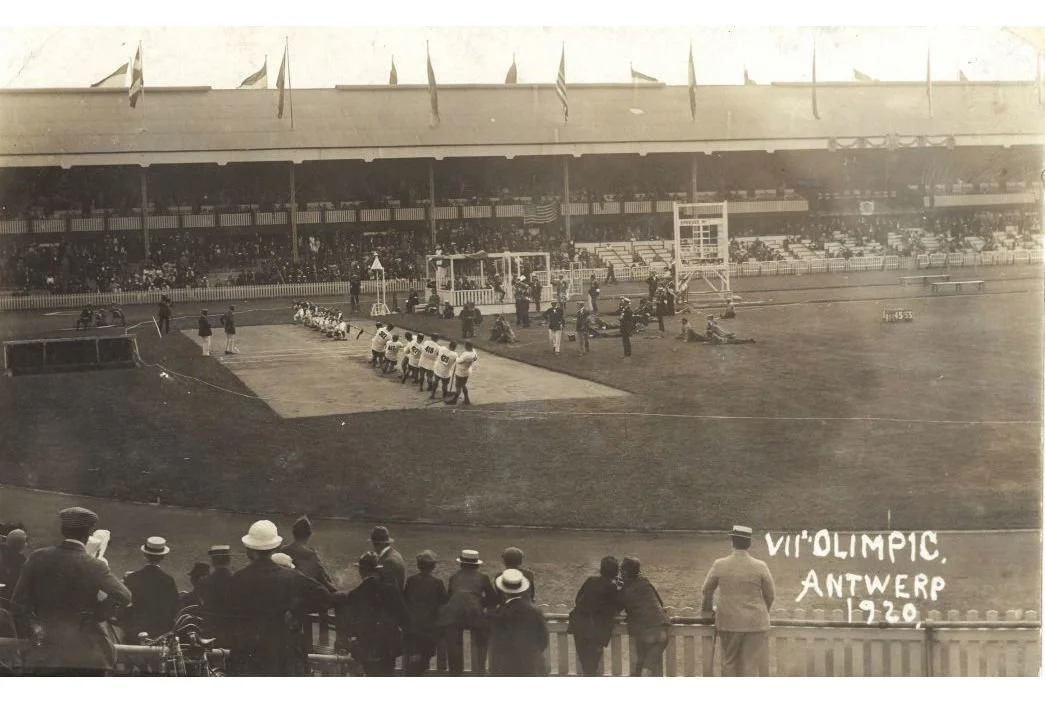
When people picture the Olympic Games, they tend to imagine sprinters, swimmers, gymnasts, and throwers and not two teams straining at opposite ends of a rope. Yet tug of war was once a full Olympic medal sport. Its final appearance came at Antwerp in 1920, where Frederick W. Holmes helped write the closing chapter with a gold-medal victory for Great Britain.
From Playground Contest to Olympic Event
Tug of war appeared at five Olympic Games between 1900 and 1920. The early contests varied in team size, but by the 1908 London Games teams had eight pullers—the format used when police squads became a formidable force in the event. Great Britain swept the medals in 1908, and the City of London Police won gold.
After the 1916 Games were cancelled during the First World War, the Olympics returned in Antwerp in 1920. Forty athletes from five nations entered the men’s tug-of-war competition, held on 17–18 August. Among them was Holmes, one of eight pullers representing Great Britain—all serving officers of the City of London Police.
Three Victories, One Historic Gold
The British team’s path to the title was emphatic. It defeated the United States, Belgium, and the Netherlands, winning each contest by 2–0. In a sport built on coordination as much as raw strength, eight men had to move as one—holding their position, applying pressure together, and waiting for the opposing line to break.
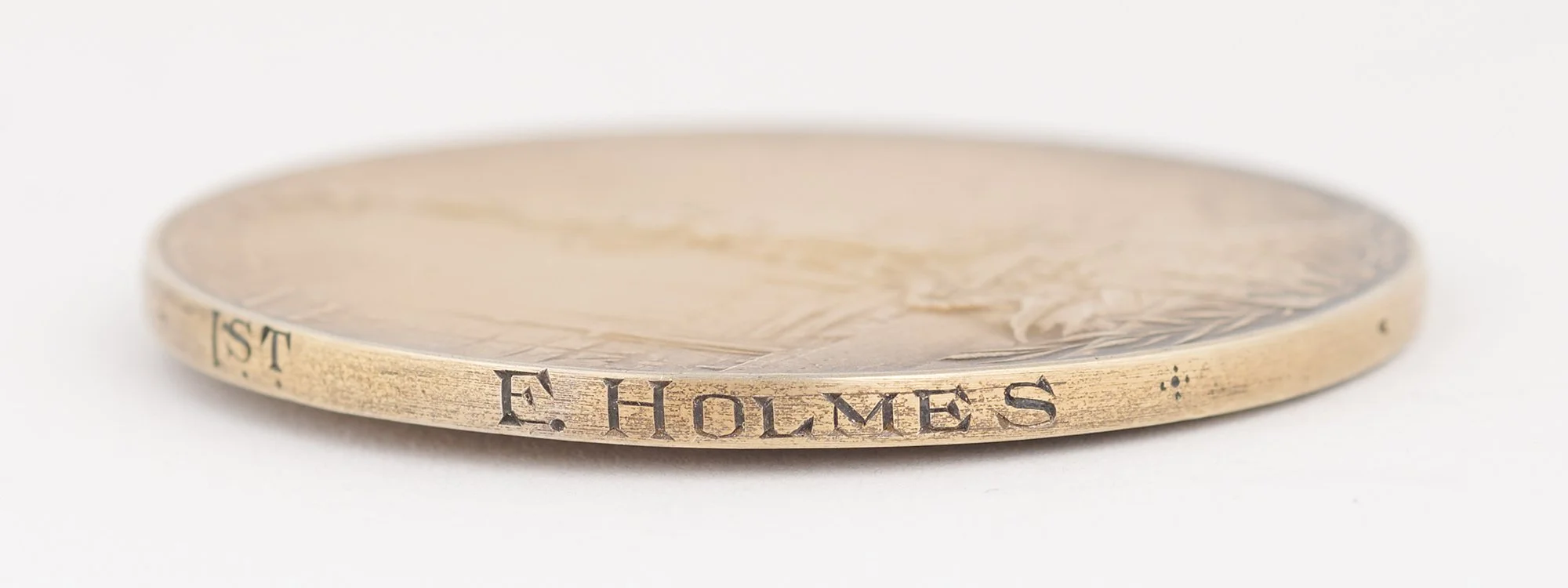
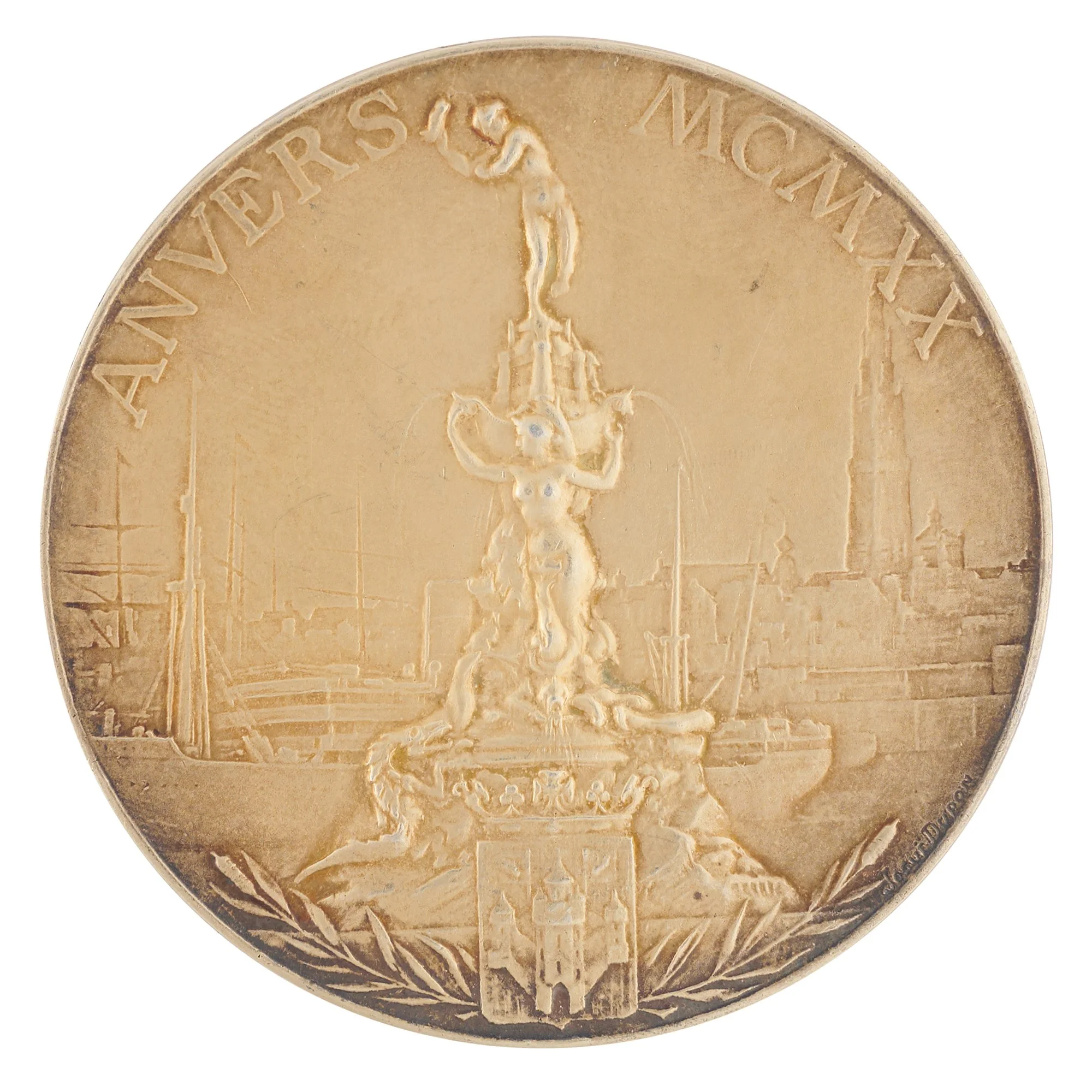
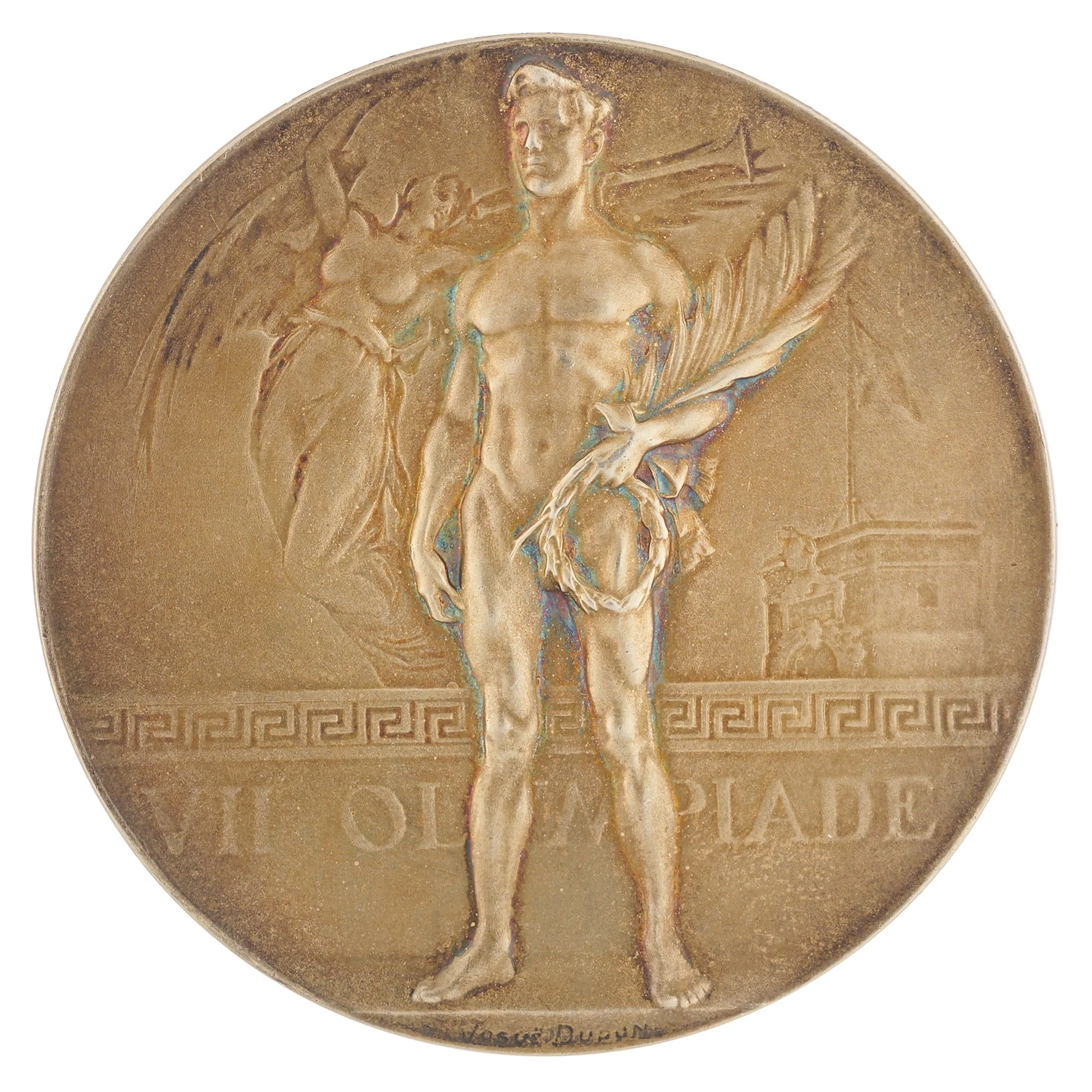
For Holmes, the reward was a gilt-silver winner’s medal designed by Josuë Dupon. Measuring 60 millimetres and weighing 89 grams, it shows a victorious athlete with a laurel wreath and palm branch on one side, and Antwerp landmarks on the other. Its edge carries a particularly personal inscription: “Tug of War, City of London Police, 1st, F. Holmes.” More than an award, it is a compact record of athlete, team, event, and place in history.
Two Medals, Two Meanings
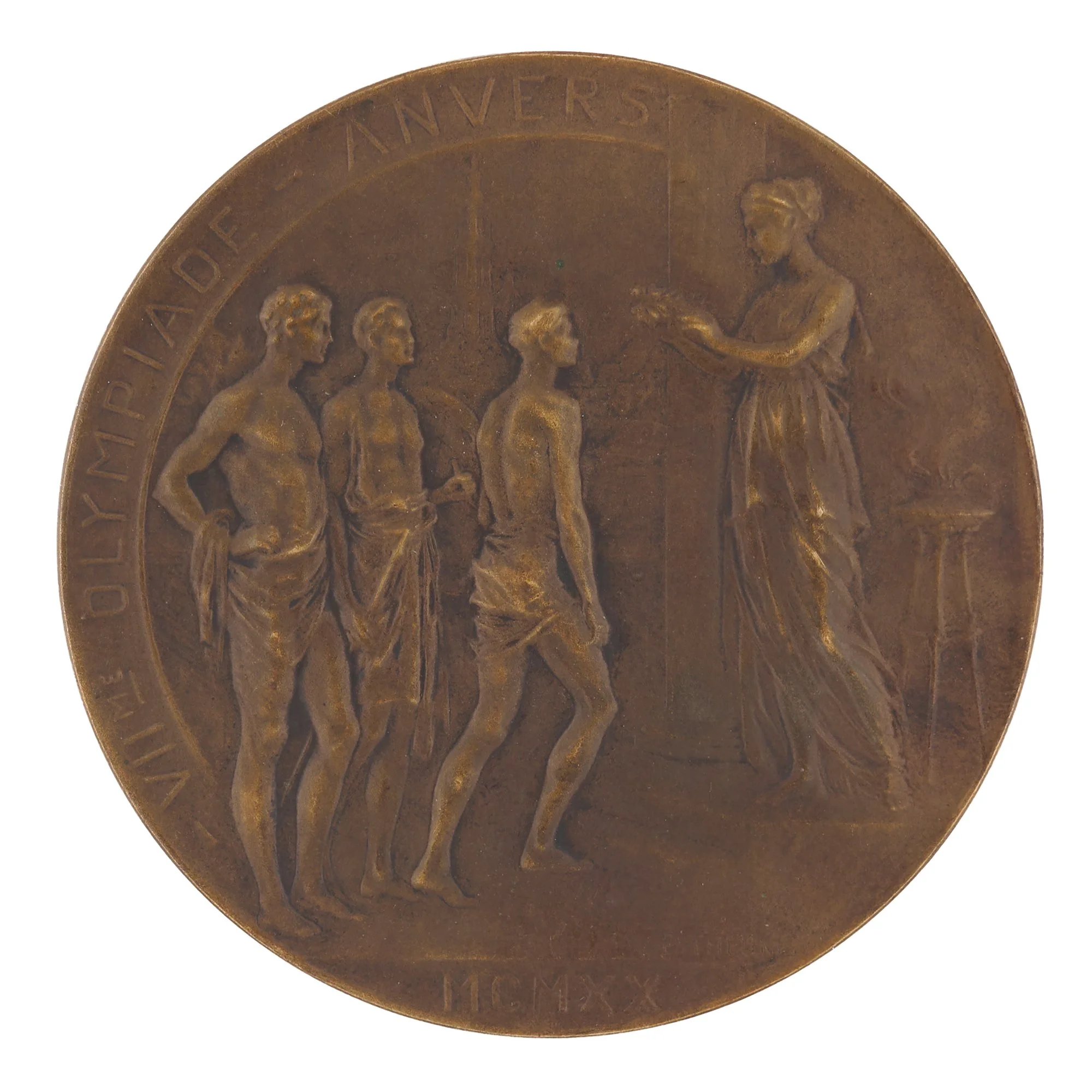
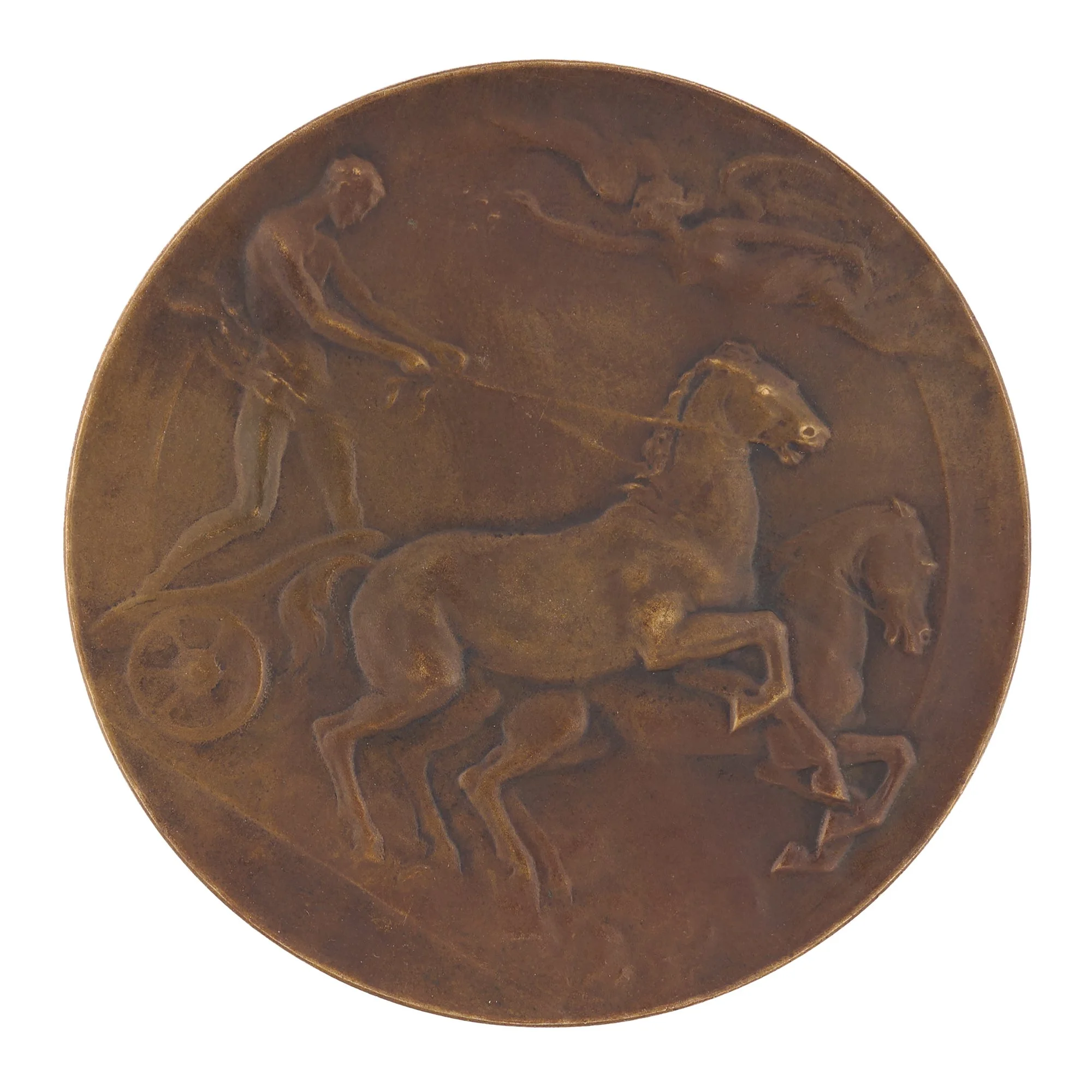
Competitors at Antwerp also received a bronze participation medal by Pierre Theunis. The 60-millimetre medal features classical imagery: a flying Victory crowning a charioteer on the front and Nike honouring three athletes on the reverse, with Antwerp visible behind them. If the winner’s medal tells us who prevailed, the participation medal commemorates the larger gathering and the return of international sport after years of war.
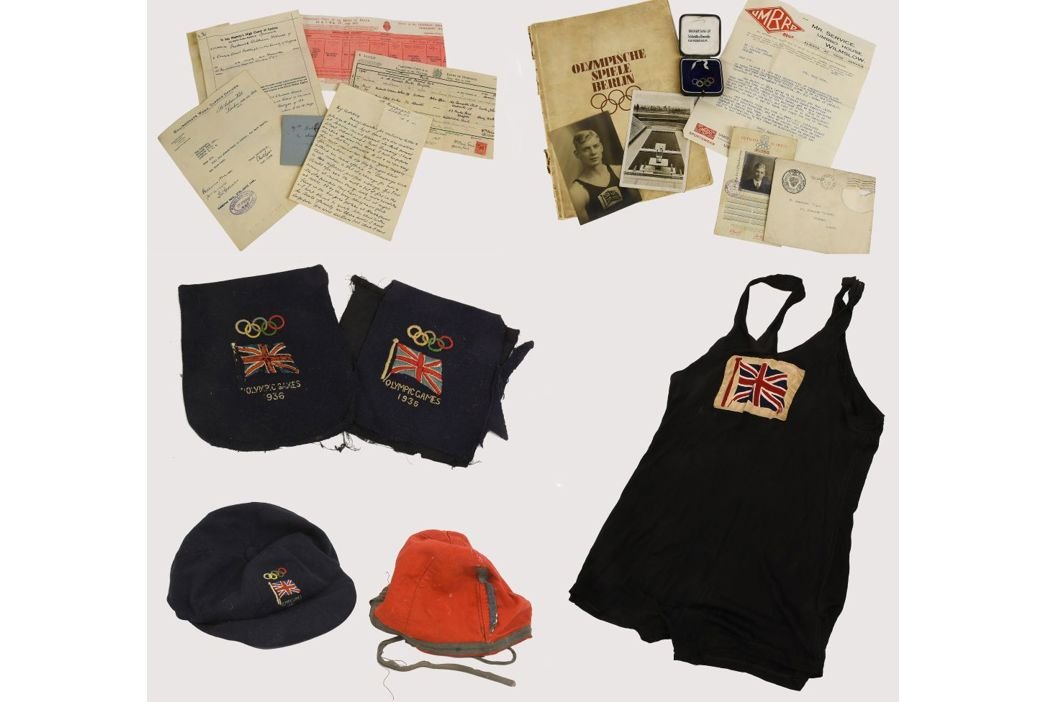
Together, these objects make Holmes’s achievement tangible. The winner’s medal celebrates a commanding performance; the participation medal places him within the wider story of the VII Olympiad. Surviving photographs, family records, and personal papers further connect the champion to the ordinary life behind the Olympic result.
The End of an Olympic Era
Antwerp proved to be tug of war’s Olympic farewell. When the Olympic programme was reduced after 1920, several team sports, including tug of war, were removed. The five Games produced champions from Scandinavia, the United States, and Great Britain, but Holmes and his fellow officers became the last athletes ever to receive Olympic gold in the discipline.
The sport did not disappear. National bodies developed, and the Tug of War International Federation later gained formal recognition from the International Olympic Committee. Tug of war remains an organised international sport—even if its return to the Olympic programme is still only an ambition.
A Champion at the End of the Rope
Frederick W. Holmes’s story is a reminder that Olympic history is broader and stranger than the familiar highlight reel. He was a police officer, a member of a tightly drilled team, and an Olympic champion in a discipline that vanished from the Games immediately after his victory. More than a century later, his medals still carry the weight of that final pull—and preserve the moment when eight London policemen stood at the summit of the Olympic world.
Some Medals Recently Sold
Several medals belonging to Frederick W. Holmes have been offered for sale. The examples I have seen have always been accompanied by a short letter or similar item addressed to him or his wife, although they may also include another object that can be personally linked to him.
Earlier this year, two medals that Frederick received before the Antwerp Olympics were sold on Tradera.
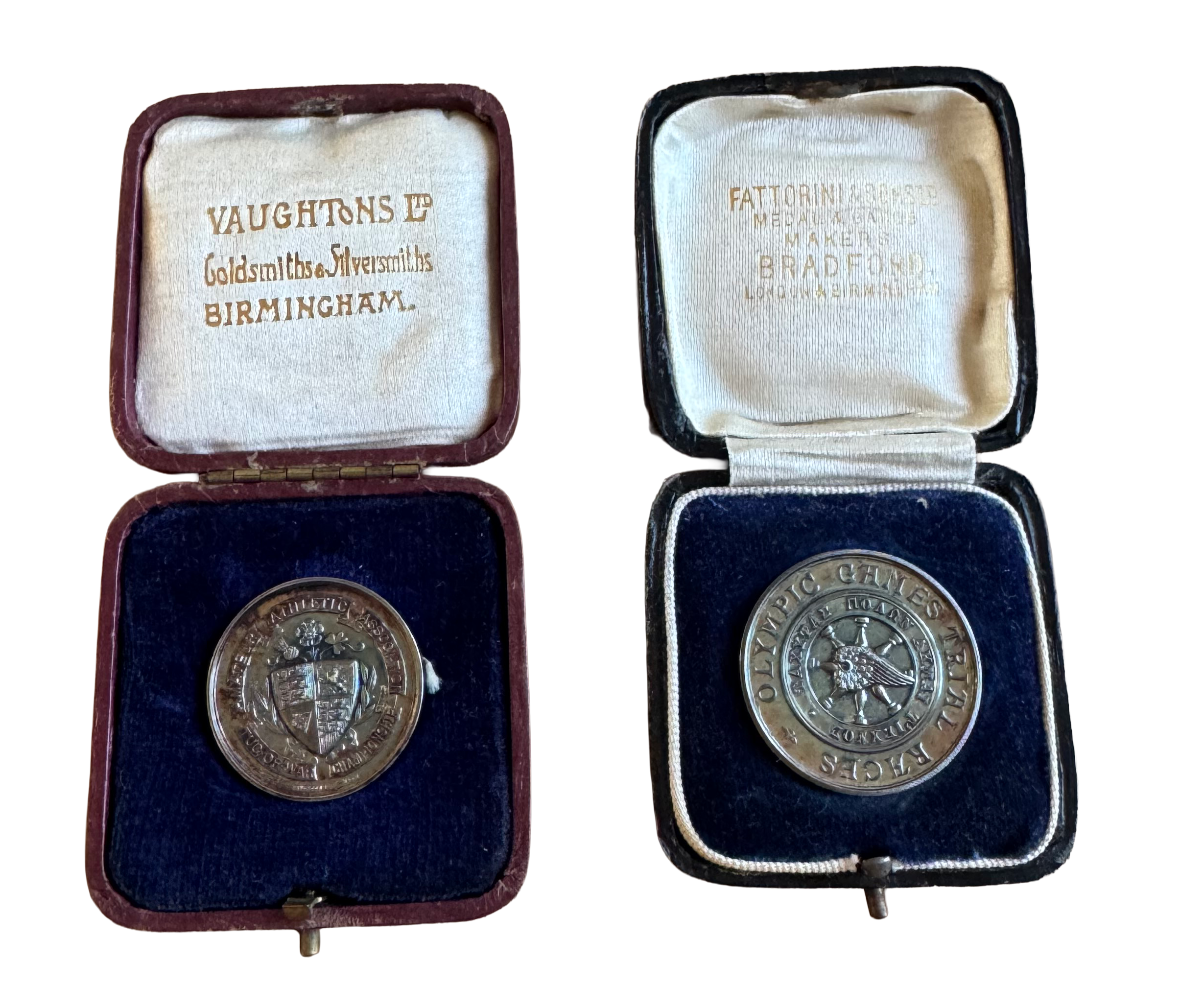
“British Olympic Games Trial Races Medal c 1920. A 31 mm, hallmarked sterling silver (22,04 grams), in wonderful condition, in Fattorini & Sons original presentation case. Sold with named City of London document. Ex Antwerp 1920 Gold Medal Winner Frederick Holmes (GBR).”
“British Amateur Athletic Association Tug of War Medal 1920. A 29 mm (1.1/8 inches) AMATEUR ATHLETIC ASSOCIATION TUG OF WAR CHAMPIONSHIP Medal 1920, hallmarked sterling silver (12,04 grams), engraved on reverse “STAMFORD BRIDGE LONDON July 3rd 1920”, in Vaughtons original presentation case marked “A.A.A. 1920” on lid. Sold with named personal invitation. Ex Antwerp 1920 Gold Medal Winner Frederick Holmes (GBR).”
More recently, two additional medals from his Olympic collection were sold by RR Auction: his participation medal and the gold medal he earned with the team—the most recent Olympic medal ever awarded in tug of war.
Who knows whether more will ever emerge?